
India's second-largest telecom operator Bharti Airtel on Tuesday posted more than twofold year-on-year jump in its consolidated net profit for the March quarter to Rs 2,008 crore, buoyed by a lift in average revenue per user and an exceptional gain. The telco said its Q4 scorecard was backed by strong performance delivery across the portfolio and its CEO Gopal Vittal, in a statement, exuded optimism about opportunities in the coming years and Airtel being "well-poised" as a company. Airtel, which competes in the market with Reliance Jio and Vodafone Idea, as well as state-owned BSNL/MTNL, promised to maintain razor sharp focus on financial flexibility, optimising the capital structure and finance cost.

https://www.rediff.com/business/report/quality-control-orders-what-does-this-mean-for-domestic-industry/20240425.htm

Bank of Baroda Q4 results: Key brokerages have raised their target prices on Bank of Baroda after the state-owned lender posted better-than-expected March quarter (Q4FY23) results. Analysts now see up to 29 per cent upside in the stock from a one-year perspective as they believe BoB is well-placed among the large public banks with nearly all key business metrics moving closer to the top-tier banks. Valuations, too, remain attractive despite steady strong quarterly performances.

India's second largest IT company Infosys' board has approved the grant of stock incentives or Employee Stock Option Plans (ESOPs) worth over Rs 51 crore to CEO and MD Salil Parekh. These stock incentives are under various heads including ESG and equity, and add up to over Rs 51 crore.

The stock of India's largest listed pure-play retail company, Avenue Supermarts (DMart), has slipped over 10 per cent from its monthly highs. A weak operational performance in the fourth quarter (January-March) of financial year 2024-25 (Q4FY25) and muted near-term outlook due to intense competitive pressures and higher costs could lead to downward momentum on the stock. While the stock dipped by 3.44 per cent in early trade on Monday, it recovered a bit to close 1.07 per cent lower at 4,017.

Diversified entity ITC Ltd on Thursday reported a 22.66 per cent rise in consolidated net profit at Rs 5,225.02 crore in the fourth quarter ended March 2023, led by a strong growth momentum across operating segments. The company had posted a net profit of Rs 4,259.68 crore a year ago, ITC Ltd said in a regulatory filing. Its revenue from operations increased 7 per cent to Rs 18,799.18 crore in the period under review against Rs 17,754.02 crore in the year-ago period.

FMCG major Hindustan Unilever Ltd on Thursday reported an increase of 12.74 per cent in its consolidated net profit at Rs 2,601 crore for the fourth quarter ended March 31, 2023. The company had posted a net profit of Rs 2,307 crore in the January-March quarter of the previous fiscal. Its revenue from sales during the quarter under review stood at Rs 14,926 crore, up 10.83 per cent, as against Rs 13,468 crore in the corresponding period a year ago, Hindustan Unilever Ltd (HUL) said in a regulatory filing.

Adani Enterprises Ltd, the flagship incubator of billionaire Gautam Adani's conglomerate, on Thursday reported a 37 per cent drop in March quarter net profit, bogged down by one-time past airport dues and commercial mining losses. Its consolidated net profit of Rs 450.58 crore in January-March - the fourth quarter of fiscal year 2023-24 - compares to Rs 722.48 crore net profit in the same period last year and Rs 1,888.45 crore earning in the preceding quarter, according to a stock exchange filing by the company.

Overall, Tata Steel becomes the seventh non-financial firm, including four oil PSUs to report quarterly revenues of Rs 50,000 crore.

From the Sensex firms, Reliance Industries, Tech Mahindra, Eternal, HCL Tech, Infosys, IndusInd Bank, Tata Consultancy Services and Bajaj Finserv were the biggest gainers. In contrast, UltraTech Cement, Sun Pharma, Power Grid, NTPC, Kotak Mahindra Bank and Mahindra & Mahindra were among the laggards.

Indian stock markets have experienced some ups and downs in the first half of 2025. However, both the Nifty 50 and Sensex saw steady gains, supported by a healthy economy and better corporate earnings. In this article, we will look at the detailed performance of these key indices and explore the sectors that drove the market rally.

Many high-profile IPOs in India since 2021 have destroyed investor wealth due to overvaluation, weak business models, and post-listing disinterest, turning 1 lakh investments into as little as 3,500.

Listed paint majors posted another lacklustre showing in the January-March quarter (Q4) of 2024-25 (FY25), with average revenue growth under 3 per cent. Sales were weighed down by Asian Paints - the market leader and the only major to report a year-on-year (Y-o-Y) decline.

'Our AI strategy -- AI in Everything, Everything for AI, and AI for Everyone -- is now in action.'

With rising credit demand, cleaner balance sheets, and renewed investor confidence, banks are positioned at the forefront of the market rally. From major players like ICICI and HDFC to broader policy shifts, there's much driving this momentum.
With rising credit demand, cleaner balance sheets, and renewed investor confidence, banks are positioned at the forefront of the market rally. From major players like ICICI and HDFC to broader policy shifts, there's much driving this momentum.
With rising credit demand, cleaner balance sheets, and renewed investor confidence, banks are positioned at the forefront of the market rally. From major players like ICICI and HDFC to broader policy shifts, there's much driving this momentum.

The early bird results for the January-March 2022 quarter (Q4FY22) hint at a slowdown in corporate sector growth in the upcoming quarters. The combined net sales of the 81 early bird companies in the Business Standard sample were up 15.1 per cent year-on-year in Q4FY22; this was less than the 15.9 per cent YoY jump reported in Q3FY22. The slowdown could be much stronger for the domestic market-focused companies, including those in the banking, finance, and insurance (BFSI) space.

A sharp correction in stock prices, signs of rural recovery, and lower raw material costs have not been enough to change brokerages' cautious stance on the top-listed paint companies. Concerns over rising competition and weak demand continue to weigh on sentiment.
The performance of Hindustan Aeronautics Limited (HAL) for 2024-25 (FY25) was driven by improved margins and lower provisions. The order book as of March was of Rs 1.8 trillion, with inflows of Rs 1 trillion during FY25.

Benefitting from the economic rebound, banks are expected to report a healthy bottom-line and asset quality profile in the quarter ended March 2023 (Q4FY23). The net profit of listed commercial banks is projected to grow by an average 43.6 per cent year-on-year (YoY) in Q4FY23 amid better net interest margins (NIMs) and declining credit costs. This is based on a combined assessment of analyst estimates for 17 banks on Bloomberg database.

Tata Motors, State Bank of India, UltraTech Cement, Tata Consultancy Services, Tata Steel and Asian Paints were among the other laggards from the 30-share pack. Maruti, Bharti Airtel, Power Grid, Hindustan Unilever and HDFC Bank were among the gainers.

Defence stocks have been on a tear, with the Nifty India Defence index hitting all-time highs. Over the past week, the index jumped around 7 per cent, far outpacing the flat performance of the Nifty 50. Over the past month, its 12 per cent gain has trebled the benchmark's return.

Mid-tier information-technology (IT) companies last financial year reported better growth numbers than their larger counterparts, highlighting their ability to navigate the uncertain macroeconomic environment. Most of these companies - such as Persistent Systems, Coforge, KPIT, and Mphasis - focus on niche businesses and industries that allow them to go deeper in terms of client mining and expanding wallet share from existing customers.

Movement in the equity market this week will be guided by a host of macroeconomic data announcements, global trends and trading activity of foreign investors, analysts said. Stocks markets concluded the last week on a subdued note, as investors grappled with global uncertainties.

The only silver lining in March's performance -- which otherwise dragged down the financial year's momentum -- was a 6 per cent year-on-year (Y-o-Y) growth compared to March of the previous year. This is largely due to incentives, festival-driven gains, and new launches.

'Now we have one of the best asset qualities in the industry.'
In Q1FY26, the bank reported fresh slippages of 8,200 crore, up 71 per cent Y-o-Y and sequentially. Of this, 7,500 crore is from the retail segment.
'Raising the entire amount in one go may not be prudent, given the market dynamics.'

The impact of the banking crisis in the US was visible in IT bellwether Tata Consultancy Services' (TCS) weak performance in the March quarter of fiscal 2023 (Q4FY23). The firm witnessed slower revenue growth in Q4FY23 and failed to meet its FY23 exit Ebit margin of 25 per cent as some clients, especially in the North American region, took to pausing projects and rising onsite costs offset utilisation gains. Sequentially, the company's revenue grew by just 0.6 per cent on a constant currency basis, which was one of the slowest paces in over 11 quarters.
Yes Bank on Saturday reported over two-fold jump in standalone net profit at Rs 452 crore for March quarter 2023-24, primarily due to benefits on the provision front. In the year-ago quarter, the bank logged a profit of Rs 202.43 crore. The private sector lender benefitted from write-back on income tax and interest on income tax returns, but the profits were limited by its inability to comply with the mandatory priority sector lending (PSL) requirements, its management said.

Rising interest rates and higher inputs costs seem to have taken the sparkle out of corporate results in Q4 2007.
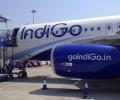
The country's largest airline IndiGo on Thursday reported more than doubling of its net profit to Rs 1,894.8 crore in the three months ended March 2024 and announced the introduction of business class in select routes this year. The strong performance in the latest March quarter, which also marks six consecutive quarters of profitability, was fuelled by higher traffic, increased capacity and a favourable external environment.

A robust show during the March quarter of 2024-25 (Q4FY25) and hopes of a strong demand momentum have led to an upward revision of Mahindra & Mahindra's (M&M's) earnings. With a slew of launches lined up amid a steady demand environment, brokerages see M&M outperforming peers in passenger vehicles (PVs), tractors and commercial vehicles (CVs).

Post-election capital expenditure (capex) has been weak at 2 per cent year-on-year (Y-o-Y) in M9FY25. The FY25 revised estimates (RE) indicate 7 per cent growth in FY25 against FY24, implying 21 per cent Y-o-Y growth in Q4FY25 government capex.
ICICI Bank on Saturday said its March quarter consolidated net profit grew 18.5 per cent to Rs 11,672 crore, helped by lower provisions. On a standalone basis, the second largest private sector lender showed a 17.4 per cent growth in its profit after tax at Rs 10,708 crore for the reporting quarter against Rs 9,122 crore in the year-ago period. For fiscal 2023-24, its standalone net profit grew to Rs 40,888 crore from Rs 31,896 crore a year ago.

Mahindra & Mahindra (M&M) delivered a stronger-than-expected operational performance in the October-December quarter (Q3) of 2024-25 (FY25), driven by solid growth in its automotive (auto) and farm equipment segments. Higher volumes improved operating leverage, expanding margins.

Shares of public sector enterprises have corrected by up to 22 per cent month-to-date until March 19, 2024. Analysts attribute this steep fall to the valuation exuberance seen after a sharp run in these counters last year and suggest investors remain selective regarding the stocks in this space. "The rally in public sector undertaking (PSU) stocks has been stretched and sharp, although it is somewhat justified by improvements seen in earnings, operations, balance sheets, and overall profitability.
Propelled by strong demand and lower costs, the country's largest airline, InterGlobe Aviation (IndiGo), reported solid operational performance in the 2024-25 (FY25) October-December quarter (Q3). While demand was driven by the festival season, year-end increase, and higher consumer spending, lower fuel and rental costs helped deliver a beat at the operating profit level.

With liquidity crunch hitting operations, many finance companies have put the brakes on sanctions in the third quarter in the aftermath of the IL&FS crisis.
